What Is the 8(a) Program?
The SBA's 8(a) Business Development Program is a nine-year mentorship and contracting program designed to help small businesses owned by socially and economically disadvantaged individuals enter and succeed in the federal marketplace. It's named after Section 8(a) of the Small Business Act.
The program's most powerful feature: sole-source contracts. The government can award contracts to 8(a) firms directly — without competition — up to certain dollar thresholds. That means no bid against 20 other companies, no months of proposal writing. A contracting officer finds you, likes what they see, and makes the award.
Sole-source limits as of 2025:
- $4.5 million for most goods and services
- $7 million for manufacturing contracts
For a business early in its federal contracting career, the 8(a) program is often the fastest legitimate path to building past performance.
Who Qualifies for 8(a)?
Eligibility is based on several overlapping criteria. You must meet all of them:
Social Disadvantage
The SBA presumes social disadvantage for members of certain groups, including:
- Black Americans
- Hispanic Americans
- Native Americans (American Indians, Alaska Natives, Native Hawaiians)
- Asian Pacific Americans
- Subcontinent Asian Americans
If you don't belong to a presumed group, you can still qualify by demonstrating social disadvantage through a personal narrative documenting how discrimination has affected your business opportunities.
Economic Disadvantage
You must demonstrate economic disadvantage. The SBA evaluates:
- Personal net worth below $850,000 (excluding equity in your primary residence and business)
- Adjusted gross income averaged over three years below $400,000
- Total assets below $6.5 million
Ownership and Control
- The disadvantaged individual(s) must own at least 51% of the business
- They must also control the business — managing daily operations, making key decisions, holding the highest officer position
Small Business Size
Your business must qualify as small under the SBA size standard for your primary NAICS code.
Good Character and Potential for Success
The SBA evaluates your business's financial health, the owner's good character, and whether the business has a reasonable chance of succeeding in the federal marketplace. Businesses that are too early-stage (less than two years old) will struggle to demonstrate this.
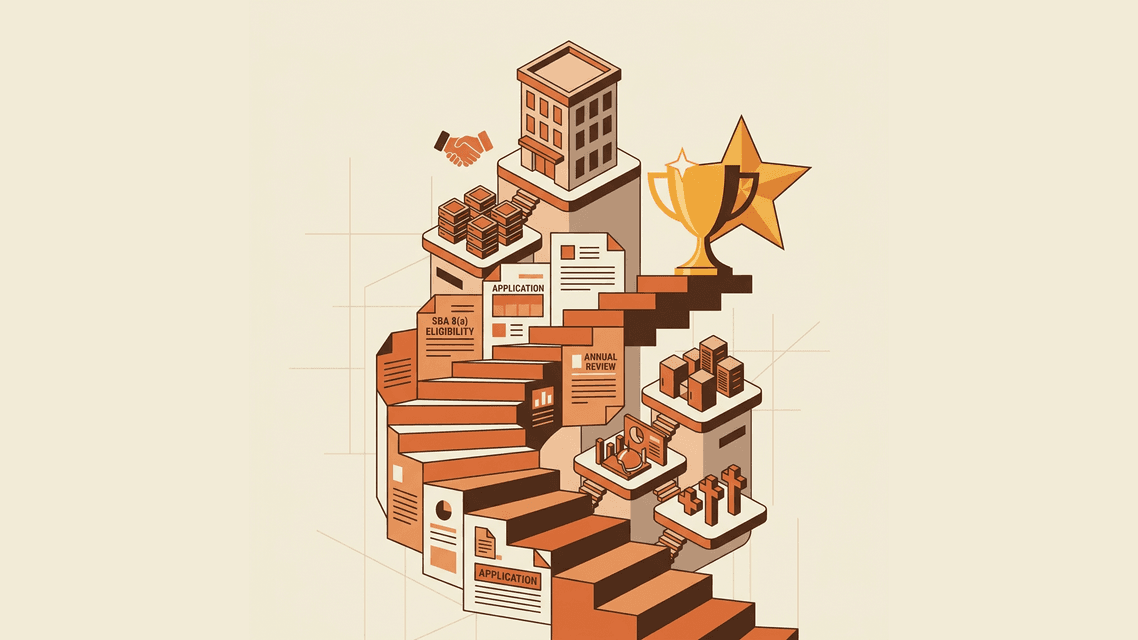
The 9-Year Program Term
Once admitted, you participate in two phases:
- Developmental Stage (Years 1–4): The focus is on building your business — pursuing contracts, developing capabilities, and growing federal past performance. The SBA actively helps you find contract opportunities.
- Transitional Stage (Years 5–9): You're preparing to compete as a graduate — as a company that no longer needs the program's special set-aside protections. Competition requirements increase during this phase.
Once you graduate or exit the program, you cannot re-enter. You also cannot participate if you've previously participated in the 8(a) program under a different business entity you owned.
The Application Process
Apply through the SBA's certify.sba.gov portal. The application is thorough and documentation-intensive. Plan for 4–6 months from submission to approval.
Key documents you'll need:
- Personal financial statements (tax returns, bank statements, investment accounts)
- Business financial statements (3 years of tax returns or company financials)
- Business ownership and organizational documents (articles of incorporation, bylaws, operating agreement, stock certificates)
- Personal narrative documenting social disadvantage (if not in a presumed group)
- Licenses, contracts, and work experience documentation
- A business plan demonstrating your potential for success in government contracting
Common reasons for denial:
- The disadvantaged owner doesn't demonstrate true operational control
- Personal net worth or assets exceed the thresholds
- The business hasn't been operating long enough to show viability
- Incomplete or inconsistent documentation
- Prior program participation (by the same owner, even with a different business)
How to Maximize the 8(a) Program
Getting accepted is the beginning — using the program strategically is what separates 8(a) success stories from companies that coasted and graduated with nothing to show for it.
- Register in the Dynamic Small Business Search (DSBS): This is how contracting officers find 8(a) firms for sole-source awards. Fill out your profile completely.
- Develop your capability statement immediately: You'll need it as soon as you're in the program. Have it ready before your acceptance letter arrives.
- Build relationships with your Business Opportunity Specialist (BOS): Every 8(a) participant is assigned a BOS at the SBA. They can connect you with contracting officers and teaming partners. Use them.
- Target specific agencies: Don't try to land a contract with every agency at once. Identify 2–3 agencies where your services are in high demand and build relationships methodically.
- Use years 1–4 to build transferable past performance: Every contract you win during the developmental stage becomes past performance you can reference after graduation. Make those years count.
8(a) and AI GovCon
AI GovCon's smart matching engine includes set-aside type as a primary filtering criterion. If you're 8(a) certified and have that registered in your company profile, the platform surfaces 8(a) sole-source and set-aside opportunities that match your capabilities — so you're not manually scanning SAM.gov for your category. The pipeline tool also helps you track contract pursuits and manage the timelines that matter most during your program years.