The $700 Billion Opportunity Most Businesses Ignore
Every year, the United States federal government spends more than $700 billion purchasing goods and services from the private sector. That's not a typo. Defense contractors build fighter jets and satellites. Small IT firms maintain federal websites. Local catering companies serve federal offices. Food suppliers stock military bases. Janitorial services keep courthouses clean.
If your business provides a product or service — almost any product or service — there is likely a federal agency that needs it. Government contracting is simply the process through which the government buys what it needs from private companies. And unlike competing for a single corporate client, winning a government contract can mean years of predictable, recurring revenue.
Yet most small business owners have never tried. The paperwork seems intimidating. The terminology is foreign. The process feels opaque. This guide is here to change that.
How Government Contracting Actually Works
At its core, the federal procurement process follows a simple loop:
- An agency identifies a need. The Department of Defense needs cybersecurity software. The Veterans Affairs department needs medical supplies. The IRS needs IT consulting.
- The need is posted publicly. Most opportunities over $25,000 are published on SAM.gov (System for Award Management), the official federal contracting marketplace.
- Businesses submit proposals or bids. You respond to the solicitation, describing your qualifications, your approach, and your price.
- The government selects a winner. Awards are based on criteria specified in the solicitation — sometimes lowest price wins, sometimes technical merit matters more.
- Work is performed and payment is made. The government pays you for delivering according to the contract terms.
The Federal Acquisition Regulation (FAR) governs this entire process. It's a large document, but you don't need to memorize it — you just need to know it exists and refer to it when specific questions arise.
Types of Government Contracts
Not all contracts are structured the same way. Here are the most common types you'll encounter:
Fixed-Price Contracts
You agree to deliver a specific result at a fixed total price. If you finish under budget, you keep the difference. If you go over, you absorb the loss. These are common for well-defined, predictable work.
Cost-Reimbursement Contracts
The government reimburses your actual costs plus a fee or profit margin. These are used when requirements aren't fully defined upfront — like research and development projects. They carry less financial risk for contractors but require detailed cost accounting.
Time and Materials (T&M) Contracts
You're paid hourly labor rates plus the actual cost of materials. These are common for IT services, consulting, and maintenance work where the total scope isn't predictable.
Indefinite Delivery / Indefinite Quantity (IDIQ)
The government establishes a contract vehicle with a ceiling value and minimum order. They can place task orders against it over time. IDIQs are popular for IT services, staffing, and professional services — think GSA Schedules.
Who Can Compete for Government Contracts?
Most businesses are eligible. You need to:
- Be registered in SAM.gov with an active registration
- Have a Unique Entity Identifier (UEI) — this replaced the old DUNS number in 2022
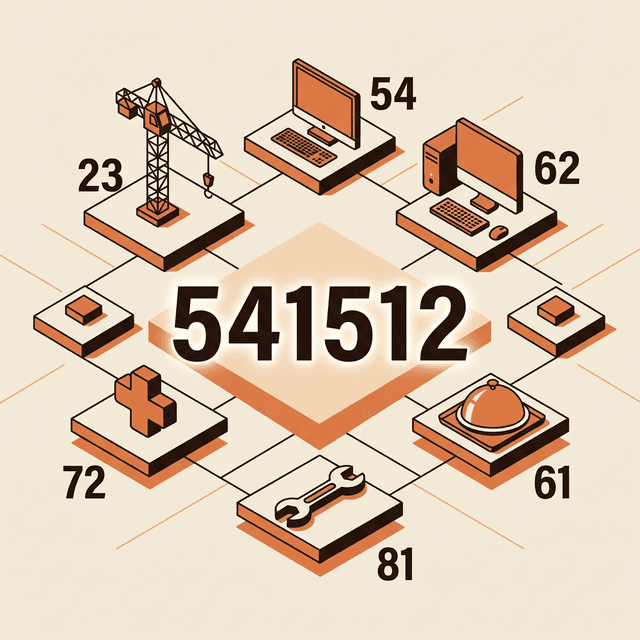
- Identify the correct NAICS codes (North American Industry Classification System) for your business (more on this in our NAICS guide)
- Comply with applicable regulations, which vary by contract type and agency
That's the baseline. From there, many contracts are "set aside" specifically for businesses in certain categories — which can dramatically reduce the competition you face.
Small Business Set-Asides: A Built-In Advantage
The federal government is legally required to award a certain percentage of its contracts to small businesses. In fiscal year 2023, that was about 23% of all eligible contract dollars — roughly $163 billion.
Here are the main set-aside programs:
- Small Business Set-Aside: Any business meeting the SBA's size standards for its NAICS code qualifies. These are the most common set-asides.
- 8(a) Business Development Program: For businesses owned by socially and economically disadvantaged individuals. Sole-source contracts up to $4.5M (goods/services) or $7M (manufacturing) are available.
- HUBZone: For businesses in Historically Underutilized Business Zones — typically rural or distressed urban areas.
- Woman-Owned Small Business (WOSB): For businesses at least 51% owned by women.
- Service-Disabled Veteran-Owned Small Business (SDVOSB): For businesses majority-owned by service-disabled veterans.
If you qualify for any of these certifications, you should absolutely pursue them. They effectively reduce the pool of competitors you're bidding against.
Key Terminology to Know
- SAM.gov: The government's official registration and opportunity platform. You cannot receive a federal contract without being registered here.
- NAICS Code: Your industry classification code. Federal agencies use this to categorize contracts and determine small business size standards.
- Solicitation: The government's formal request for bids or proposals (also called RFP — Request for Proposal, or RFQ — Request for Quote).
- Contracting Officer (CO): The government employee authorized to enter into, administer, and terminate contracts.
- Past Performance: Your track record on previous contracts. Agencies use this heavily when evaluating proposals.
- Capability Statement: A one or two-page document that summarizes your business's services, differentiators, past performance, and contact info. Think of it as a resume for your business.
- CAGE Code: Commercial and Government Entity code — a five-character ID assigned to your business by the government.
How AI GovCon Helps
The biggest challenge in government contracting isn't winning — it's finding the right opportunities before they close, understanding which ones you can actually win, and submitting proposals that stand out.
AI GovCon automates the intelligence layer of this process. Our platform monitors SAM.gov and other sources in real time, filters opportunities by your NAICS codes and capabilities, scores your probability of win, and helps you manage an active pipeline — so you can focus on writing winning proposals instead of drowning in research.
Your Next Steps
- ✅ Register your business on SAM.gov
- ✅ Identify your primary NAICS codes (read our NAICS code guide)
- ✅ Check if you qualify for any small business certifications
- ✅ Create your capability statement
- ✅ Start browsing opportunities on SAM.gov filtered by your NAICS codes